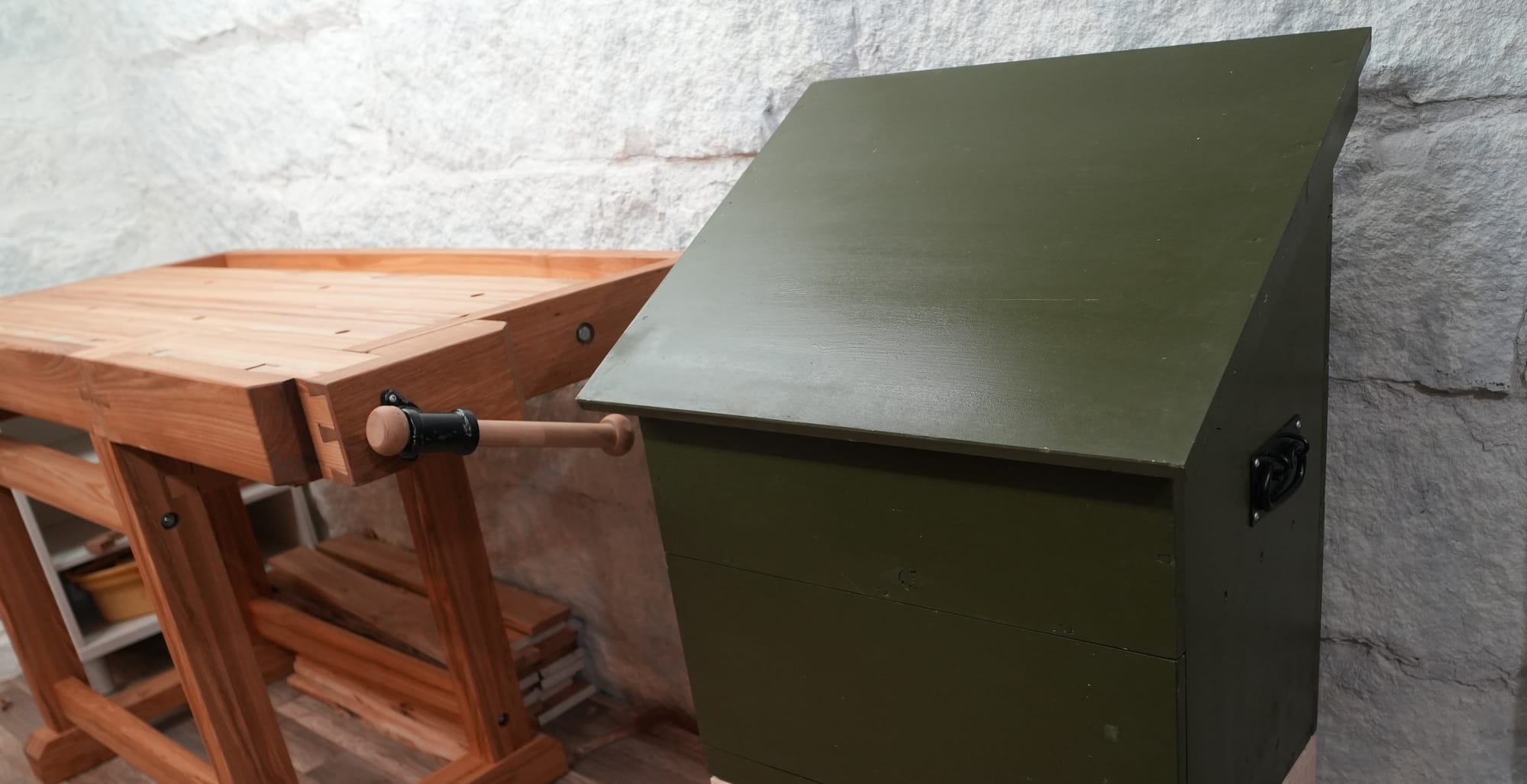

Keeping your tools organized is very important, and a tool chest does just that. But a tool chest can be for a lot more than just storage.
Reason 1: Two Wood Shops
Since my main wood shop is in a non-insulated barn there are a lot of aspects of fine woodworking that become difficult during the Swedish winters. I have a tiny woodworking station setup in a room in our basement to allow me to work throughout the winter, but moving the tools back and forth is quite annoying
If most of my tools can live safely inside of a tool chest moving between the shops can become a lot easier. I built the chest with this in mind and have got some heavy duty handles on it to be able to carry it even when fully loaded.
This also allows me to take my tools with me if I were to go somewhere else to do woodworking.
Reason 2: Mobility
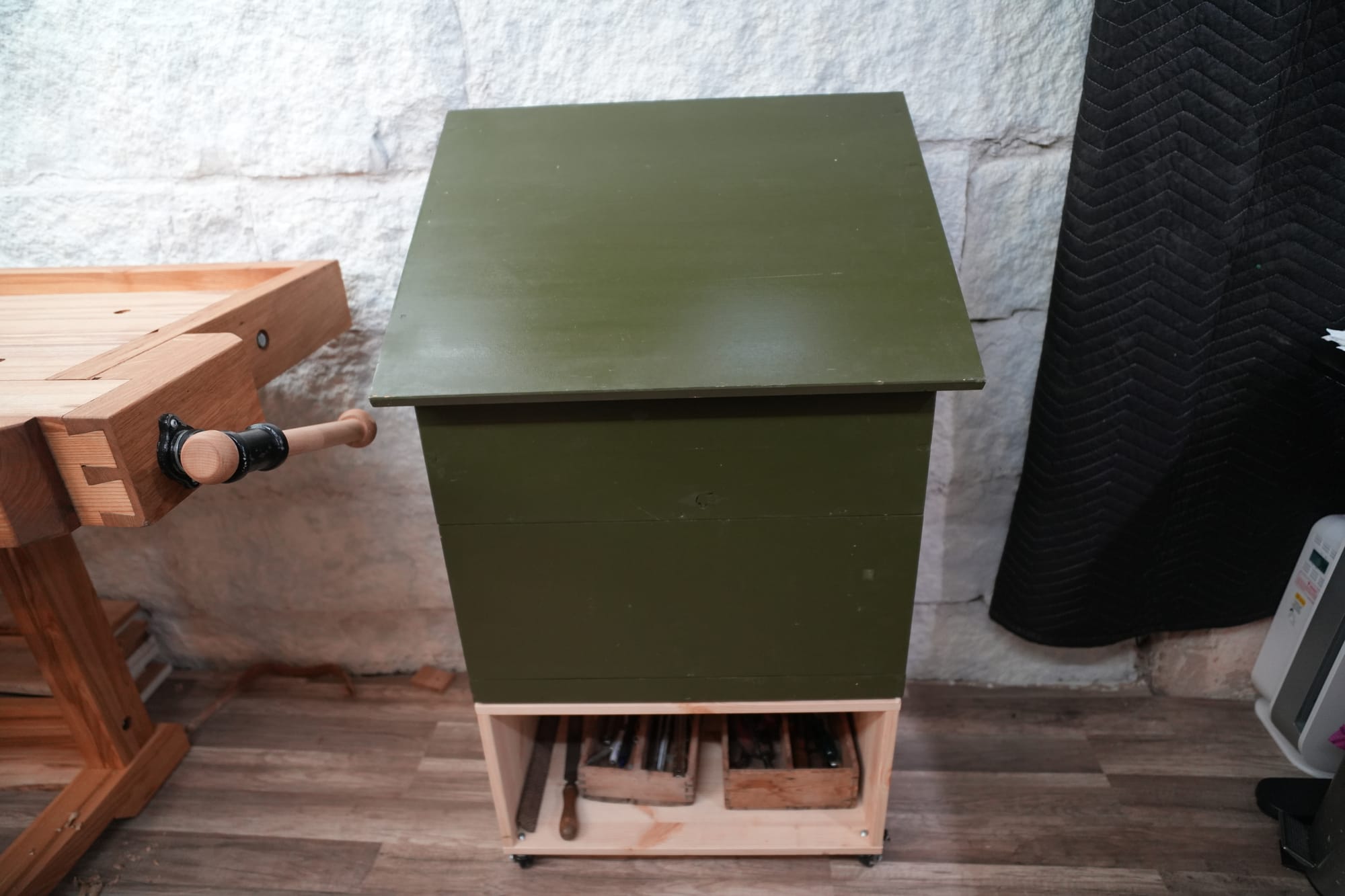
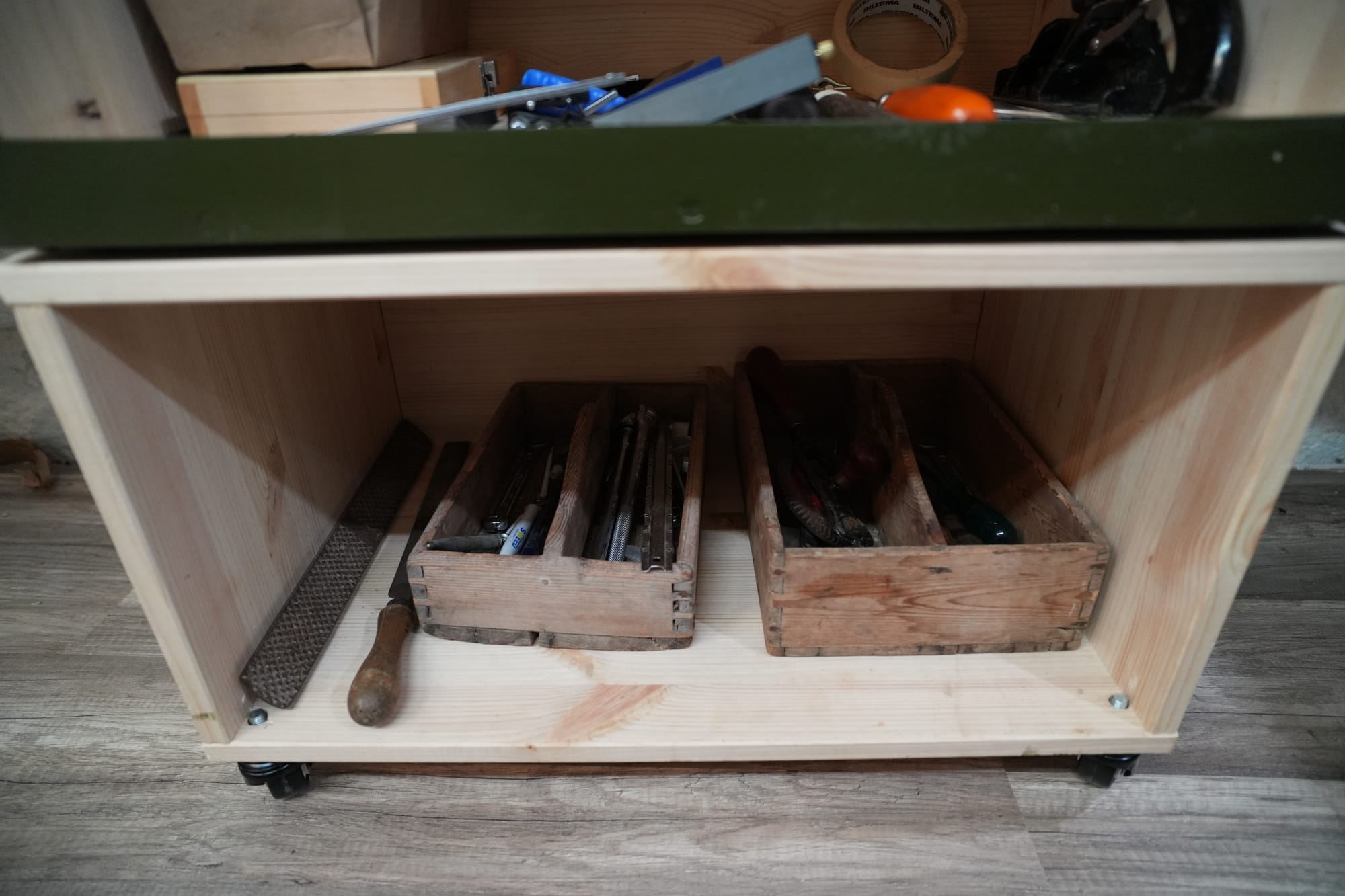
While this is something of an extension of the first reason, being able to move the tool chest around within the shop is also a good reason for having a tool chest. To help with this I built a little mobile base with locking casters on it, that also raises the tool chest a little.
Sometimes I have multiple projects going at once in the barn workshop and being able to roll the tool chest over to the one I want to work at currently could be quite convenient. Not having to walk to the other end of the barn to return a tool to the chest after using it is also a nice quality of life improvement. Hopefully that will also improve the odds of staying organized.
Reason 3: Organization
And that leads me into the third, and perhaps most obvious, reason for building this chest: tool organization. When your tools and other equipment have a dedicated place when not in use you are more likely to actually clean up after yourself when you finish a task or when you are done for the day.
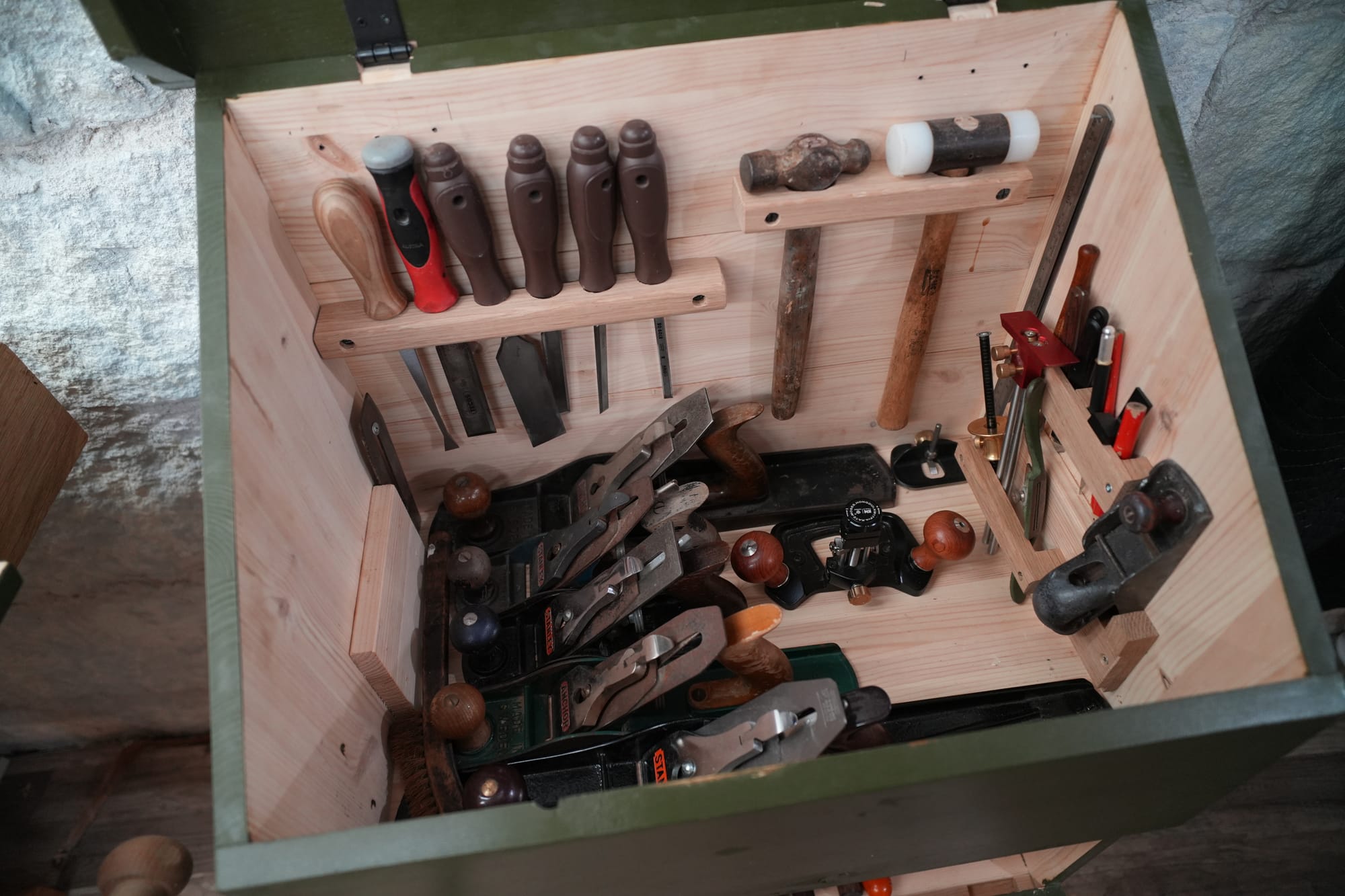
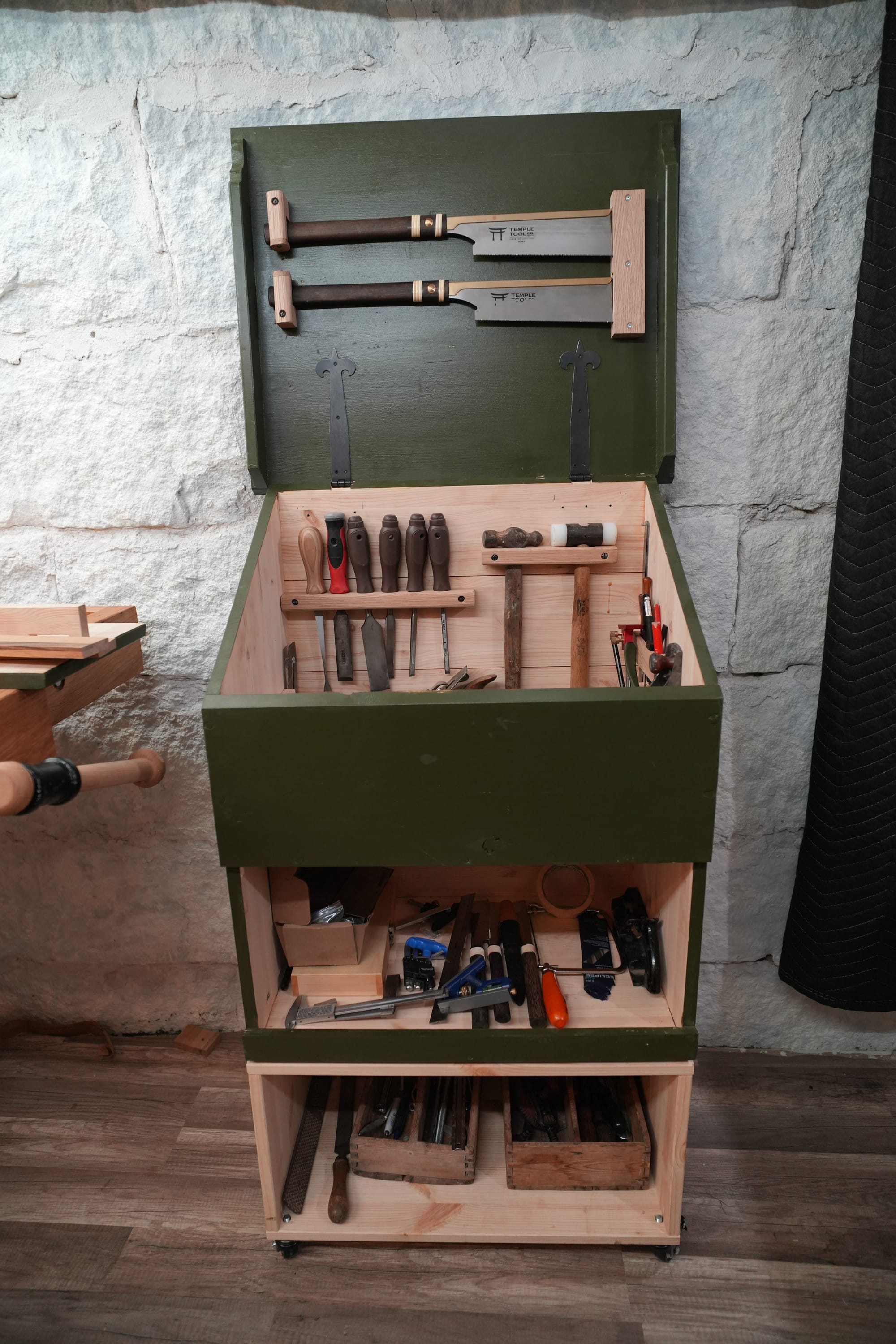
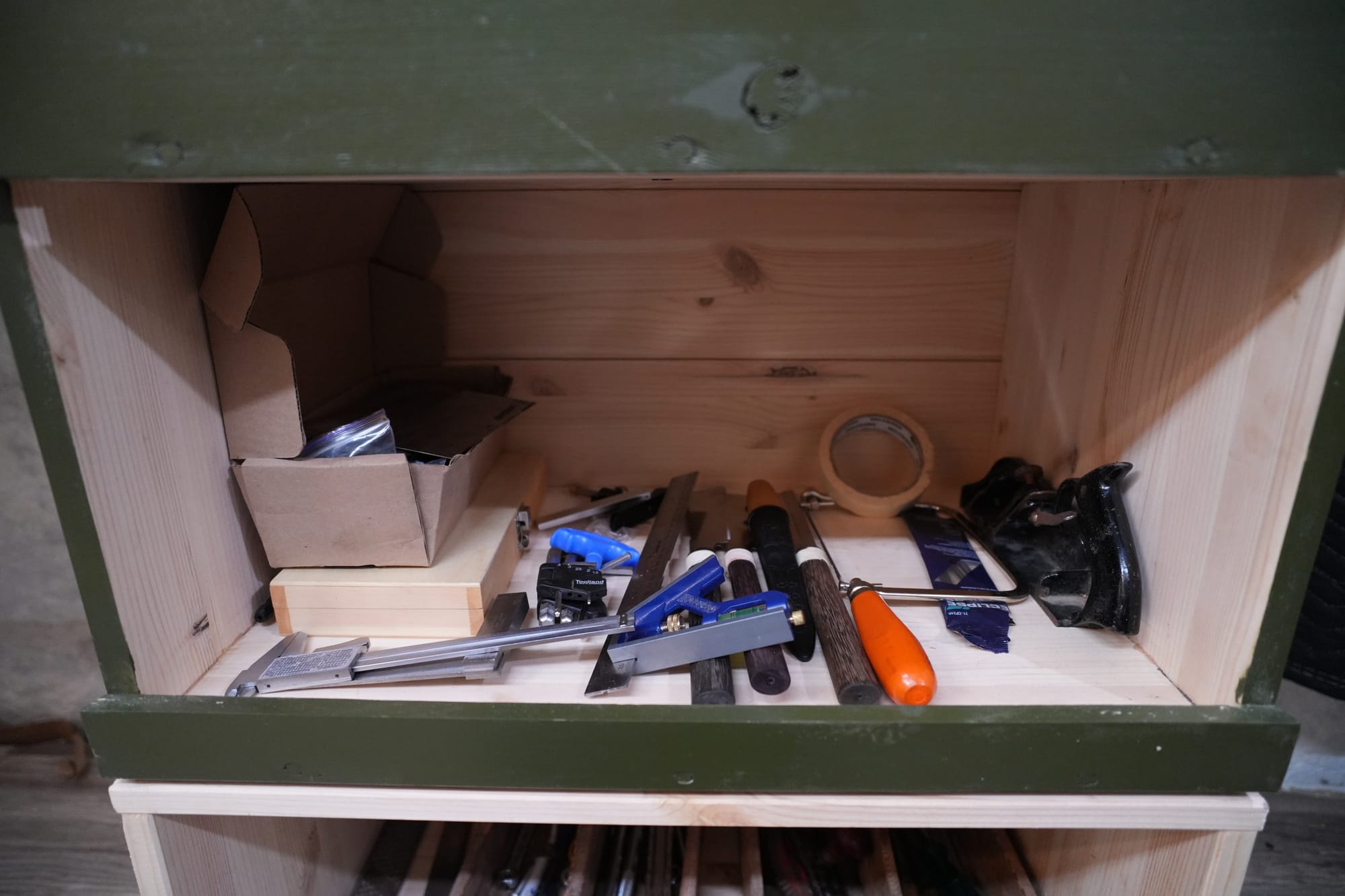
For now, I focused on the essentials when it comes to tool holders. I made saw holders, chisel rack, mallet rack, and some other small item holders for now. I still have a few items I want to make holders for, but I also want to move on to new projects.
I am still fairly new when it comes to hand tool woodworking so which tools I use the most is yet to be seen. I don't think it is worth spending a whole lot more time on "first order retrievability" now before I know what I will be retrieving the most.
Reason 4: Rust Prevention
As I mentioned earlier, my main wood shop is in an old hay barn. This means that the climate inside, is basically exactly the same as the climate outside. This is not the best environment to keep tools and machines that have a tendency to rust.
In addition to this, a wood shop tends to produce sawdust, which actually worsens the situation further. Sawdust is hygroscopic, which means it absorbs moisture from the air, and traps it wherever the sawdust is sitting. Further, wood naturally contains tiny amounts of salt, so you essentially end up with a "gentle" salt water bath wherever the sawdust ends up sitting.
Putting your tools inside of a tool chest significantly reduces the amount of sawdust that settles on the tools, and this is one of the biggest reasons why I am building my tool chest. I am also moving a lot of the tools I previously had hanging on the wall into the tool chest to reduce rust buildup.
Now, for the stationary machines, you can reduce rust by taking a moment to brush off any settled dust on them when you're done for the day. And if you are leaving the tool(s) unused for a longer period of time, especially during the colder humid months, it is a good idea to spray WD-40 or some equivalent on the metal surfaces.
Notes on the Build
I chose a Dutch Tool Chest specifically purely since it seemed pretty portable, and a fairly efficient design. There are probably "better" designs than this, but this is want I wanted to try to build.
I obviously looked at the videos from Lost Art Press, and a bunch of other people on YouTube when preparing for this build, but I ended up drawing up a design of my own from scratch based on the "average" of those videos taking into account for the specific materials I wanted to use.
I used pine shelving boards for the main construction and white oak for the tool holders. The 1x12" boards people in the US seem to use are nowhere to be found in Swedish home improvement stores, the widest commonly available boards here seem to be about 9". But these shelving boards, sometimes also referred to as "hobby boards", are available everywhere here and come in a wide variety of sizes.
I made my own tongue and groove panels for the back with some off-cuts of the pine shelving, which is sure to get some purists fired up about it. But I didn't want to use a full board there due to wood expansion so I ended up doing it this way.
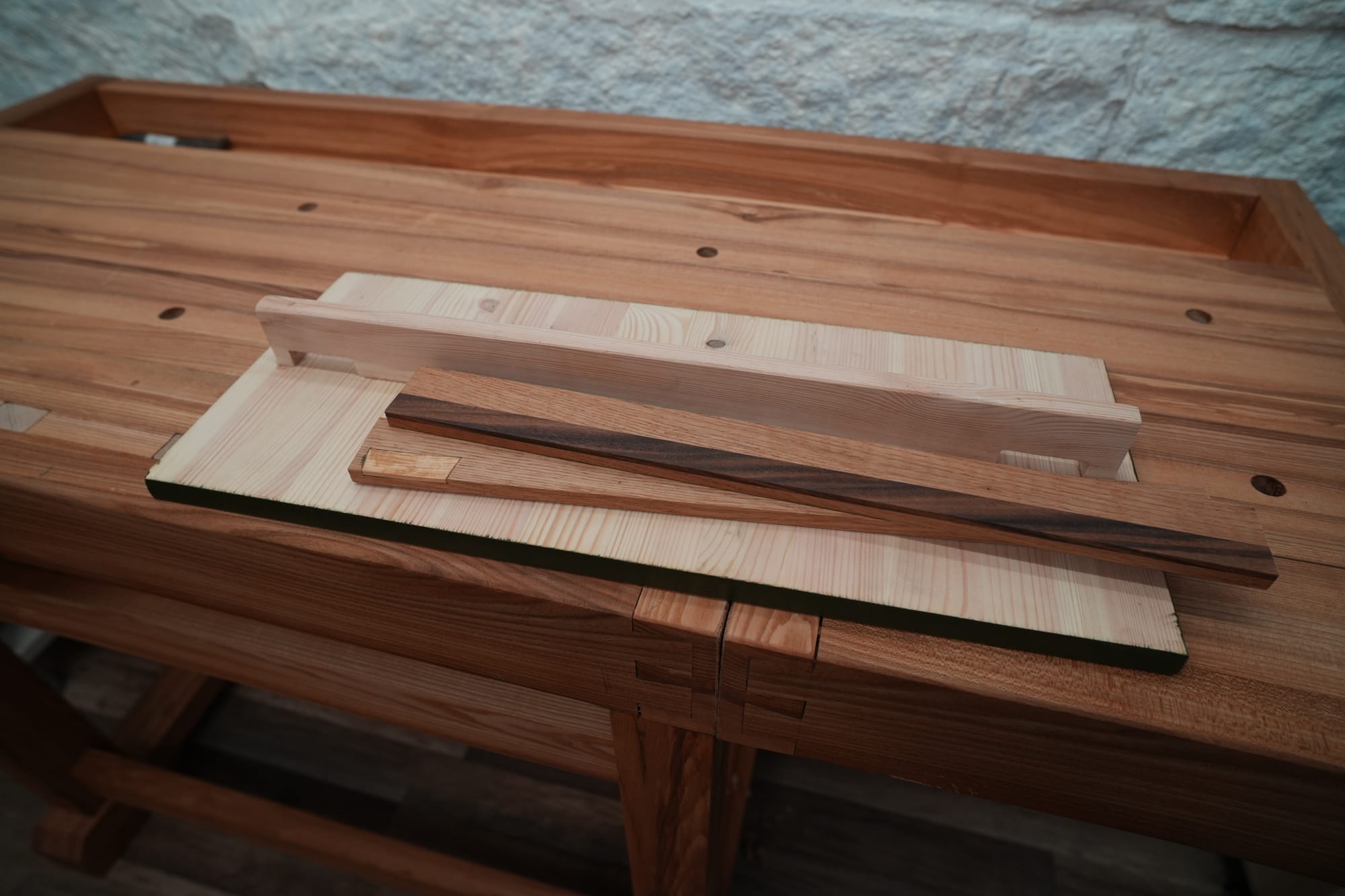
One thing I saw several people do was using winding sticks as the locking mechanism for the fall front so I ended up adapting that for my design as well.
Future Additions
There are several more tools I would like to have holders for in the top section of the tool chest, but I will get back to those at some time in the future.
For the top section of the fall front "cavity"(?) I want to put in some form of a drawer. Not sure if I want to have it narrow and open between the winding sticks or if the drawer (or two drawers) will open in-between the winding sticks.
I also want to build some sort of holder for the fall front to hook it onto the side of the mobile base, so It has a dedicated place to live when not on the tool chest itself.